Some respite in Sisyphean quest to end polio in Karachi
AI Summary
Polio vaccination workers in Karachi continue door-to-door campaigns despite long hours, misinformation and occasional hostility. Local authorities and community organizations have introduced meals and transport to support workers and improve the campaign’s reach.
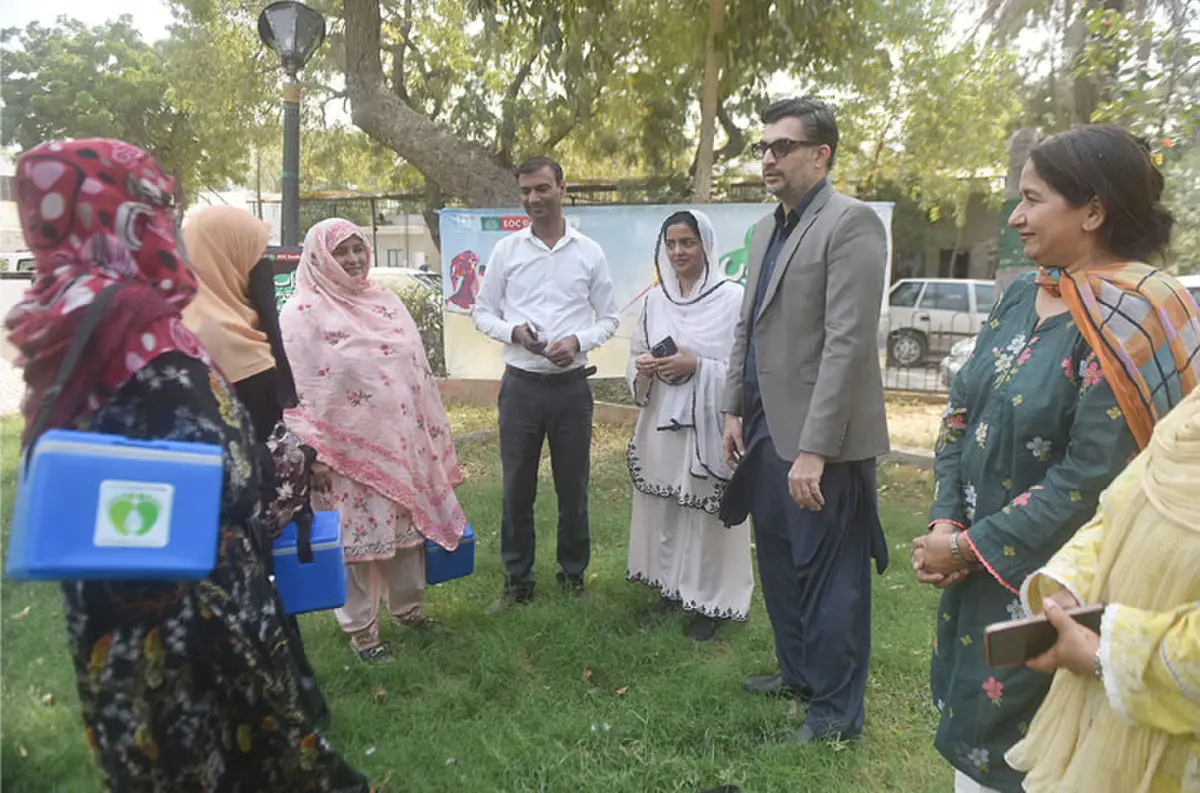
KARACHI: They are foot soldiers. Their only weapon: polio drops in a small blue icebox with an ice pack to keep the vaccine cool, even though they themselves may be sweating and exhausted in the scorching heat. These health workers (mostly women as they are allowed inside homes) fight for the eradication of polio in Pakistan, one of only two polio-endemic countries in the world alongside Afghanistan. Sadly, in both Pakistan and Afghanistan, the fight against the crippling disease has run into rumours and misinformation, especially among the uneducated. Many not just refuse to let their children receive the drops, they even turn violent if shown some sense. And yet in the face of all adversity the women carry on with their duty. From 8am to 5pm, they walk miles as they go door to door asking if there is any child there under the age of five to administer the drops to. Some 80 to 90 homes within a district are covered daily and the cycle must be repeated twice, even thrice sometimes, during a seven-day campaign. For safety reasons each team is also accompanied by a support team, including police and other personnel from the commissioner’s office and the Sindh government’s health department. It was during such a campaign last year when in the field the Deputy Commissioner of District Central, Taha Saleem, heard of a problem that they had been overlooking while concentrating more on covering areas to administer vaccines, target number of children and the children missed because of family refusals. Through small lunches and Qinqi rickshaws, District Central administration helps make the enormous task of vaccinating thousands of children less daunting One of the polio workers quietly diverted his attention to the amount of walking they have to do while covering areas. Though her colleagues laughed it off, the deputy commissioner got thinking. There happened to be tens of thousands of homes in his district to be visited by around 4,000 polio workers who had to walk from eight to 10 kilometres daily to complete their task. In order to arrive on duty at 8am, many of the workers left their homes before dawn, around 6am. And their work doesn’t usually finish precisely at 5pm. Realistically, it is 7pm as they update their data. The area supervisors who look after three to four teams even stay till 9pm. During this while they also barely ate even though their stipend of Rs1,500 per day included food and transportation allowance, which they would not spend to save money. So it came up to working for over 14 hours on an empty stomach. Something had to be done. And it included food and transportation for the polio workers. Memorandums of Understanding (MoUs) were signed for this purpose with Saylani Welfare Trust and the Bohra Community for food and the Town Municipal Corporation for transportation. In District Central now, from 1pm to 2pm lunch is supplied during campaigns and they are also provided with transport in the shape of seven- to nine-seater rickshaws or qinqis. The qinqis bring the workers to the field and they remain parked there until the workers are done. The drivers of these vehicles have each polio worker’s number, too, to make sure no one is missed while transporting them from here to there. According to Taha Saleem, the little consideration shown to the polio workers has increased their turnover. “Since last year, when we started facilitating them, we have also been able to retain the workers. They have all returned this year,” he said. Dr Aneel Kumar, who liaisons between the DC Office and the health department, said that thanks to transportation provided to the workers, they are also able to keep the vaccine fresh the entire day. “Their ice packs used to melt. But now they are able to go back to their facilitation centres to get fresh ice packs,” he said. Kanwal Bashir, a polio worker, told Dawn that earlier to save money they used to have a samosa or a packet of chips, which would serve as lunch for them. “But now we get to eat better. The transport also helps us replace our ice pack every three to four hours to keep the vaccine fresh,” she added. The next polio campaign starts on Monday (today). The teams of polio workers of District Central are feeling motivated and ready to face all challenges that come their way. Published in Dawn, November 2nd, 2026