Pipelines to bypass the Strait of Hormuz
AI Summary
To mitigate risks from geopolitical tensions in the Strait of Hormuz, Middle Eastern countries including Saudi Arabia and UAE are planning and expanding pipelines to bypass the Strait. These projects aim to secure crude oil supplies by diverting shipments to alternate routes and ports, with new pipelines expected operational by 2027-2028.
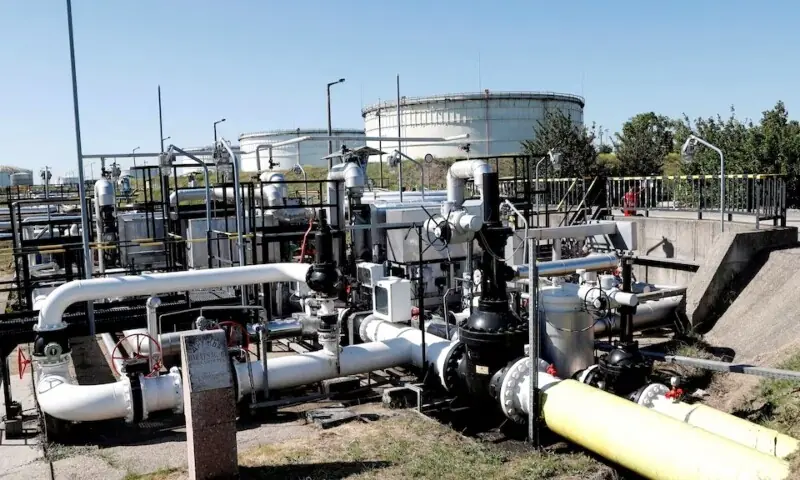
The battle for Hormuz, the growing possibility of greater Iranian influence on the critical passageway, question marks about the reliability and security of crude supplies from the Middle East, and the subsequent quest to divert oil shipments away from the crucial shipping chokepoint are reshaping global energy flows. Efforts are underway to decouple and desensitise global crude markets to events in the Strait of Hormuz. Several new pipelines projected to carry oil from the Middle East to markets bypassing the strait are on the drawing board. In a note released a couple of weeks ago, analysts at Goldman Sachs estimated that seven new pipelines are currently under discussion in the oil-rich Middle East. Once operational, possibly by the end of 2028, these pipelines could carry roughly 14 million barrels per day (bpd). This is about 60 per cent of the oil that was being shipped through the strait, Goldman estimated. Before the war, roughly 23m bpd were passing through the Strait of Hormuz. Efforts to bypass Hormuz are on. The blockage of the Strait has impacted crude exports from Saudi Arabia. With Hormuz becoming a no-go area, Saudi Arabia was forced to use its East-West pipeline to carry crude to Yanbu port on the Red Sea coast to reach its markets. Analysts at Goldman Sachs estimated that seven new pipelines are being considered that could carry about 60pc of the oil that was being shipped through it Yet there is a limit to this alternative route. The pipeline’s maximum capacity is 7m bpd, and that has been attained. Now, of this, some 2m bpd is needed for Saudi domestic refineries in the western region of the Kingdom. That meant, at best, some 5m bpd were available for export. That is considerably less than it was exporting before February 28. Saudi Arabia is reportedly now considering expanding the capacity of this crude oil pipeline to 9m bpd. Sources told Reuters that the kingdom is in preliminary talks with its neighbours on the project that would enable it to transport more oil, bypassing the Strait of Hormuz. The UAE, in the meantime, has also fast-tracked the construction of another West-East pipeline that would bypass the Strait of Hormuz. This new pipeline is due for completion in 2027. The pipeline will double the UAE’s export capabilities, adding to the capacity of the already existing Habshan-Fujairah pipeline, which bypasses the Iranian stranglehold on the Strait. Once completed, the 252-mile pipeline would run parallel to the existing Fujairah pipeline and double the country’s overland capacity to 3.6m barrels a day. The UAE is also seeking to establish a new port. This new port will further reduce its dependence on the Strait of Hormuz. The Financial Times reported that a Dubai-based supply chain operator was in talks to build a new port and container terminal in the coastal area of Fujairah, where the existing Habshan–Fujairah Pipeline ends. Iraq’s exports have also been badly hit by the closure. Due to limited pipeline options to bring its oil to global markets, Baghdad has to rely on its southern Basra port on the Persian Gulf. Yet, Basra is within the range of Iranian projectiles. Over the last couple of weeks, Iranian drones have hit a vessel and the Basra port infrastructure. The war has made Iraq’s oil production fall by more than 50pc to about 1.9m bpd in June compared with around 4.2m bpd in February before the US and Israel attacked Iran, according to the Organisation of the Petroleum Exporting Countries data. Since April, Iraq has been transporting crude through Syria by truck to circumvent the closure of the strait. Iraq needs alternate routes to export its oil. It is working on two pipeline projects. One route would continue through Kirkuk oil fields to Turkey’s Mediterranean port of Ceyhan, and the other envisages rebuilding the old Kirkuk to Baniyas pipeline, transporting crude oil from Kirkuk to the port of Baniyas on Syria’s Mediterranean coast. Last week, Iraq and Syria signed an agreement to rebuild this old oil pipeline, stretching from Kirkuk in northern Iraq to Syria’s Mediterranean coast with a nameplate capacity of 700,000 bpd. The pipeline has not been in use since it was damaged during the US invasion of Iraq in 2003. Iraq’s state news agency reported that Chevron would carry out the project. Thomas Barrack, US Ambassador to Turkey, said the oil pipeline agreements would lead to a program “that will make the Strait of Hormuz an afterthought.” TotalEnergies CEO Patrick Pouyanne said earlier that Syria could become an “important transit country for oil coming from Iraq to the Mediterranean,” especially with the need for “alternative routes” given the closure of the Strait of Hormuz. A much more ambitious project is already underway in Iraq on a 435-mile-long Basra-Haditha oil pipeline. The pipeline would carry 2.5m bpd. The project was approved in 2024, and construction began in May this year, two months after the start of the US-Iran war. Upon completion, this pipel