Pakistan's first lunar rover named 'Jinnah-1': Suparco
AI Summary
Pakistan announced its first lunar rover, Jinnah-1, which is scheduled to be part of China’s Chang’e-8 lunar south pole mission in 2029. The rover will conduct scientific studies of the lunar surface, symbolizing Pakistan’s commitment to advancing space exploration.
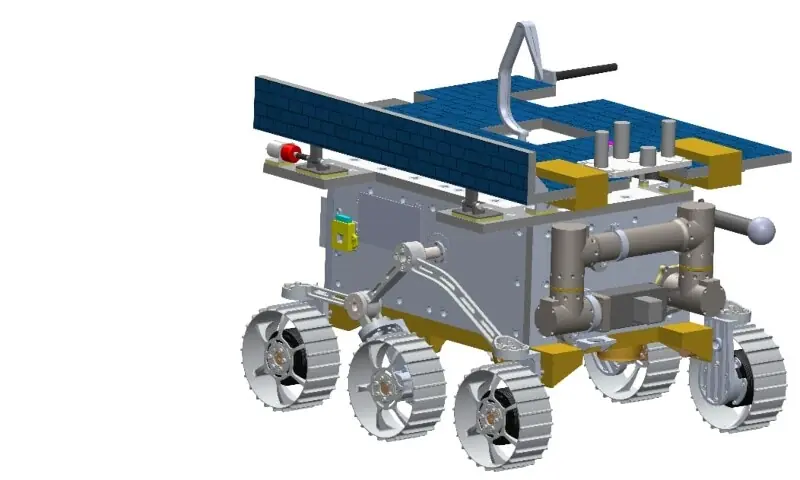
Pakistan Space and Upper Atmosphere Research Commission (Suparco) on Thursday announced “Jinnah-1” as the official name of the country’s first lunar rover. The rover is scheduled to be sent to the Moon in 2029 as part of China’s Chang’e-8 mission, where it will conduct scientific research at the lunar south pole, Suparco said. The Moon’s south pole is known for its challenging terrain and potential to yield significant scientific discoveries. In a ceremony held in Islamabad, Suparco said that the name was selected from 4,000 proposals received in a countrywide competition. Seven participants had proposed the name “Jinnah-1” and the winner was selected through a lucky draw, according to a statement from Suparco. Tayyab Karim, a 17-year-old from Bahawalnagar, was declared the winner for proposing the name, Suparco said. The name pays tribute to Quaid-i-Azam Muhammad Ali Jinnah and symbolises “Pakistan’s resolve, progress and new space horizons”, Suparco Chairman said. Jinnah-1 will study plasma, radiation and the lunar surface’s geology, as well as conduct key experiments related to future lunar research and the prospect of human presence on the Moon, Suparco said. Pakistan’s first lunar rover, Jinnah-1, will be a part of China’s Chang’e-8 mission to the Moon’s south pole in 2029. —Photo courtesy of Suparco Suparco announced the collaboration with China’s Chang’e-8 mission in 2024. “This collaboration marks a significant milestone for Pakistan’s space programme, as Suparco’s indigenous rover will be part of the mission to explore the lunar surface,” the space agency said at the time. Nasa is targeting 2028 for the first-ever landing of astronauts on the Moon’s south pole, as part of Artemis IV, seeking to beat China’s planned crewed mission, Chang’e-8, to the same lunar region. In 2023, India managed to land a craft — the unmanned Chandrayaan-3 — near the Moon’s south pole. Its landing came days after a Russian probe crashed in the same region and four years since the previous Indian attempt failed at the last moment.