Pakistanis, Indians among 13 dead after 'technical malfunction' at Qatar LNG plant
AI Summary
A technical malfunction caused an explosion at Qatar's Ras Laffan LNG plant, killing 13 individuals including Pakistani and Indian nationals. The incident is under investigation but is reported not to affect export operations or local supply.
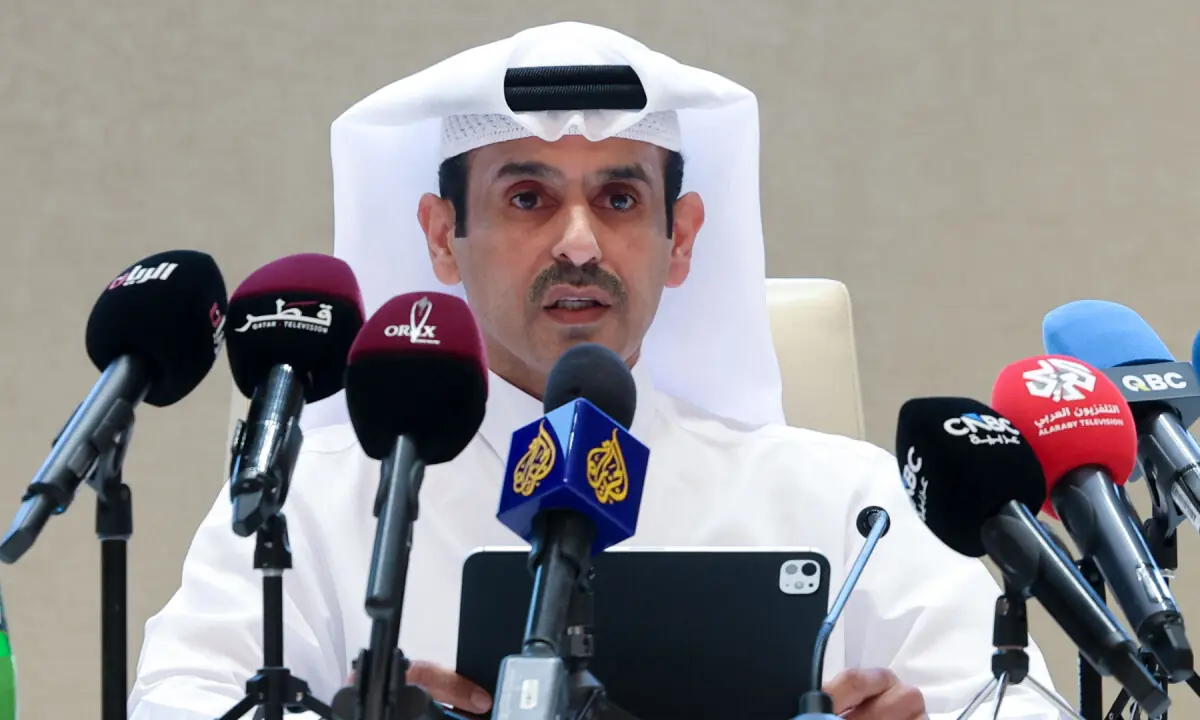
Pakistani and Indian nationals were among 13 killed after an explosion at Qatar’s massive Ras Laffan liquefied natural gas (LNG) complex, attributed to a “technical malfunction”, Qatar’s Minister of State for Energy Saad al-Kaabi said on Monday. Authorities are investigating the cause of the explosion, which Saad al-Kaabi said was “an accident and not sabotage or hostile in nature”. He announced “the tragic loss of 13 lives of our people who hold Indian and Pakistani nationalities”. The state minister said that 66 people were reported injured and were receiving medical treatment, none of whom were in life-threatening condition”. They hold Qatari, Indian, Pakistani, Bangladeshi, Kenyan, Ghanian, Tanzanian, Nigerian and Nepalese nationalities, he added. The interior ministry said a “technical malfunction” occurred on Sunday evening, with authorities saying the incident took place at the Barzan local gas supply facility. The explosion occurred as workers were restarting operations halted after an Iranian attack in March. The blast took place at a unit supplying gas to local firms and reverberated across Doha. Saad al-Kaabi, also the CEO of QatarEnergy, said an investigation had started into the incident. “It will not affect anything regarding export. It will not affect anything regarding our local requirements,” Kaabi said, adding that the explosion had “no environmental impact”. At the time of the explosion, AFP journalists in the Qatari capital heard the blast on the country’s northern coast, 64 kilometres away. Another AFP journalist, 20km away, saw bright orange flames and a plume of smoke rising from the area, home to the world’s largest liquefied natural gas hub. Qatar, which hosts a major US military base, has come under Iranian missile and drone attacks during the Iran war, which trapped around 20 per cent of global LNG supply in the Gulf before some shipments began to resume recently. Qatar’s state-owned energy company said the blast erupted “during the start-up of operations at Ras Laffan Industrial City, which resulted in an explosion and fire at Barzan local gas supply facility”. Late on Sunday, QatarEnergy said the fire had been brought under control after emergency response teams were deployed. Pakistan’s embassy in Qatar expressed its deep sorrow over the incident and said it remained “available to facilitate Pakistani nationals and their families in connection with the incident”. The embassy added that it was in contact with the relevant Qatari authorities. It further said Pakistani community members requiring assistance may contact the embassy in Doha at +974 6679 0329 and +974 6648 6213. ‘Internal explosion’ Ras Laffan had already been badly damaged in the US-Iran war as Iranian strikes targeted Gulf energy infrastructure and forced Qatar to halt gas production. Kaabi said the status of the Strait and attacks on Gulf nations remained a “geopolitical, military issue” drawing a line between Sunday’s explosion which he said was “different”. “We have to take it in stride and move on and learn from it,” the minister, who is also QatarEnergy’s chief executive officer (CEO), added. Kaabi explained Barzan’s production had been stopped since December 2025 for maintenance and was first restarted again two days prior to the explosion. Earlier, Qatar’s interior ministry had described Sunday’s incident as an “internal explosion” and a “technical malfunction”. The incident highlights the challenges Gulf producers face in ramping up oil and gas production from facilities shut in during the Iran war. Qatar has been among the hardest hit by the closure of the Strait of Hormuz as it has no alternative routes to export its LNG. Restarting LNG operations is a particularly complex process due to a deliberately slow cooldown to avoid thermal shock. LNG trains cannot restart simultaneously and must be brought back in sequence. In the liquefaction process — which turns gas into a liquid state by cooling it down to approximately minus 162 degrees Celsius — the cooldown is the most critical step. The facility is located in Ras Laffan Industrial City, QatarEnergy’s site for LNG production and export with an annual production capacity of 77 million metric tons. An Iranian missile attack in March struck two of its key gas-processing units, slashing about 17pc of Qatar’s LNG export capacity, which QatarEnergy’s CEO told Reuters would take three to five years to repair. The war also forced the company to evacuate about 10,000 workers from offshore rigs and onshore processing plants. The company reported no injuries during the March missile attack.