IWT issue matter of national security for Pakistan: Indus Waters commissioner
AI Summary
Pakistan's Indus Waters Commissioner Syed Muhammad Mehar Ali Shah emphasized that the Indus Waters Treaty (IWT) is a critical national security issue due to its impact on millions' livelihoods and the economy. The treaty, governing water sharing between India and Pakistan, serves as a conflict prevention mechanism amid recent tensions and threats to water flow.
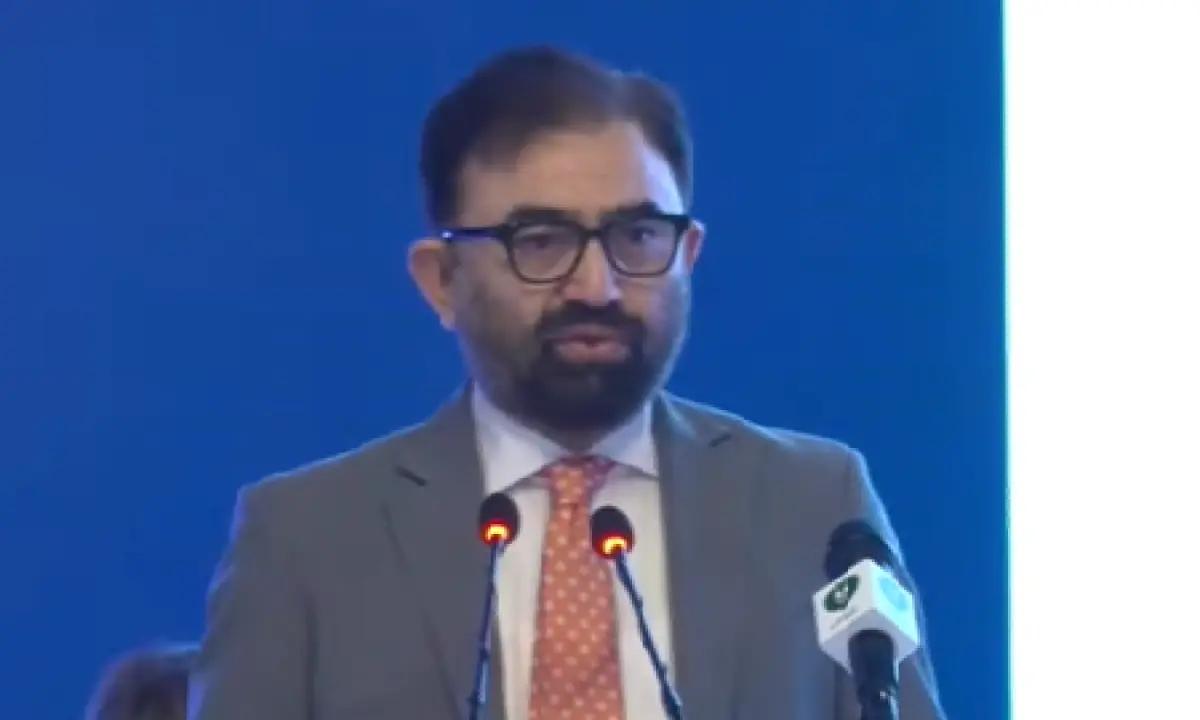
Pakistan Commissioner for Indus Waters Syed Muhammad Mehar Ali Shah said on Tuesday that the issue of the Indus Waters Treaty (IWT) for Pakistan was not just a matter of hydrology but national security. “When the lives and livelihoods of more than 240 million are tied to the Indus basin, when more than 80 per cent of the arable land depends on these waters […], when agriculture contributes almost a quarter of GDP and almost one-third of employment, water uncertainty becomes national uncertainty,” he explained, highlighting the significance of the water-sharing agreement between India and Pakistan. The commissioner remarked, “Flow prediction is not a luxury of planning but part of the survival architecture of the state.” He expressed these views at a seminar held in Islamabad to highlight the legal and constitutional framework of the IWT, which remains a contentious issue between India and Pakistan. The 1960 treaty regulates the distribution of the Indus River system between India and Pakistan. However, India announced last year that it was placing its IWT obligations in abeyance. The announcement followed an attack on tourists in occupied Kashmir’s Pahalgam that killed 26 tourists — an incident New Delhi blamed on Islamabad without evidence. For its part, Pakistan strongly denied the allegations and called for a neutral investigation. The treaty and its status remain a point of contention between the two sides since, with an Indian minister recently saying that they were working to stop the flow of water into Pakistan, and Deputy Prime Minister and Foreign Minister Ishaq Dar later assailing 17 projects by India on Indus waterways as “tools for hydro-hegemony”. In his address at the Islamabad seminar, Shah said the IWT was a “conflict prevention system” and that “Pakistan’s restraint has been deliberate”. “But water, food, livelihood, and social stability are not negotiable abstractions; that is why Pakistan has publicly defined the strategic threshold for any attempt to stop and divert the treaty water belonging to Pakistan,” he explained. The commissioner for Indus Waters said the IWT had converted a “territorial water system” into a legal structure by fixing rights and obligations each party owed to the other. “The eastern rivers were allocated to India, and the western were placed under Pakistan, with India’s use confined to carefully defined exceptions,” he recalled. “Pakistan accepted that bargain, rebuilt its irrigation life around that bargain and planned its national water economy around the assurance that the western rivers would be let flow.” “The bargain remains a bargain,” he said, stressing that the agreement was “not a favour, but a binding settlement”. The commissioner reiterated that the treaty functioned as a “conflict prevention design” and was engineered for “peace”. He said the treaty worked because of four elements operating together — allocation, cooperation, the institution and dispute control, the Indus Water Commission in this case. Shah further explained, “Allocation tells each side what it may use, what it may not; cooperation provides data, notice and inspection, and commission gives a regular channel of communication,” he said, warning that removing any of these elements would lead to the peace function failing. “Therefore, abeyance is not a diplomatic slogan but an attempt to disable the stabilising architecture of the treaty,” he said. ‘Inalienable right’ The seminar began with an opening speech by Information Minister Attaullah Tarar, who said the 240 million people of Pakistan had an “inalienable right” to water from the Indus River System. “When we say that Indus is our lifeline and our people, the 240m people of Pakistan, have an inalienable right to the water of Indus, we mean it, from the core of our hearts,” he said. He also described the IWT as “an instrument of peace and regional stability”. “Today, we are not merely discussing the treaty. We are discussing the lifeline of nearly 240 million people of Pakistan,” he said. He added, “When we identify ourselves as Pakistanis, we ask a question as to who we are. And if you go back into history, the Indus water [sic] civilisation defines us as a people. “Whenever I go abroad, I always tell my counterparts that we are the people of the Indus Valley civilisation. Our identification is that we are people based on the banks and tributaries of the mighty Indus River.” The minister said water was life, and the “Indus has given life to Pakistan”. For Pakistan, he went on to say, water was simply not a resource but a matter of life itself. Tarar said the Indus River system had nurtured one of the world’s oldest civilisations for thousands of years. “From the towering peaks of Gilgit-Baltistan to the fertile plains of Punjab and Sindh, these waters have connected our people across geography and history.” He added that the story of Pakistan was, in many ways, the story of the Indus. It was for this reason that the Indus Waters Treat