ISRO detects possible subsurface ice on moon
AI Summary
Scientists from India's Physical Research Laboratory using Chandrayaan-2 data have found strong evidence of subsurface ice in lunar craters near the Moon's south pole. This discovery is significant for future lunar missions, as ice can support long-term human presence by providing drinking water, oxygen, and rocket fuel.
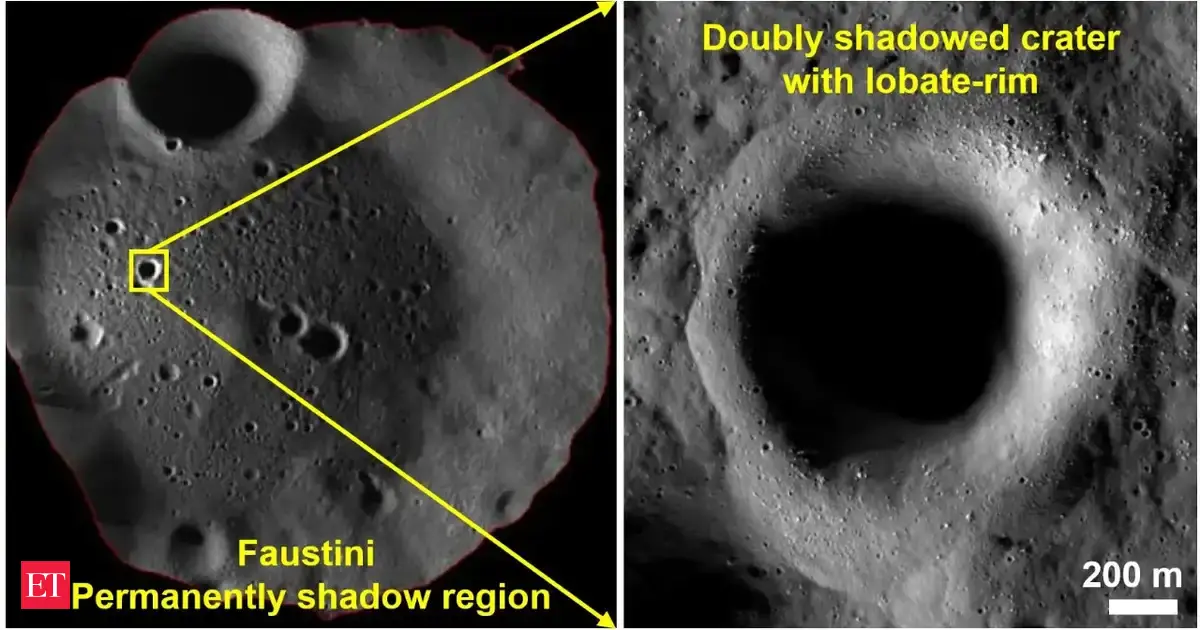
Scientists from Ahmedabad-based Physical Research Laboratory have identified strong evidence of subsurface ice in some of the coldest craters near the Moon’s south pole using data from Chandrayaan-2, the Indian Space Research Organisation (ISRO) said in a release on May 27.The findings are based on observations from the Chandrayaan-2 orbiter’s Dual Frequency Synthetic Aperture Radar (DFSAR), a microwave imaging instrument capable of probing beneath the lunar surface.Among the craters examined, a 1.1-km-wide crater located within the larger Faustini crater showed particularly strong evidence of subsurface ice. Researchers said the crater also displayed a distinctive lobate-rim morphology, a flow-like structure that may indicate the impact penetrated an ice-rich subsurface layer.Also read | India races to secure fertilisers as crucial sowing season approaches amid war disruptionsThe research adds to a growing body of evidence that the Moon’s polar regions may contain substantial water resources beneath the surface. Earlier studies based on Chandrayaan-2 observations had detected signatures of water molecules and hydroxyl across parts of the lunar surface, while recent datasets from the orbiter have provided high-resolution polar maps aimed at identifying ice-bearing regions.The DFSAR instrument onboard Chandrayaan-2 is considered a major technological milestone because it is the first fully polarimetric synthetic aperture radar to study the Moon in both L-band and S-band frequencies. Since entering lunar orbit in 2019, the orbiter has generated thousands of datasets to map the Moon’s polar terrain and dielectric properties.Also read | US forces to withdraw from Iran's vicinity, lift naval blockade, says state media citing draft dealThe latest findings are expected to play an important role in shaping future lunar missions, including planned efforts to explore and utilise lunar resources. Water-ice is considered critical for sustaining long-duration human presence on the Moon because it can potentially be converted into drinking water, oxygen and rocket fuel.