E20 petrol may damage rubber parts: Report
AI Summary
India has fully transitioned to E20 petrol nationwide in April 2025, with concerns raised in a report about potential damage to rubber fuel-system components in vehicles previously designed for E10 petrol. Engine durability tests showed mixed results, with some failures noted in certain models, but overall emissions and performance remain within acceptable limits.
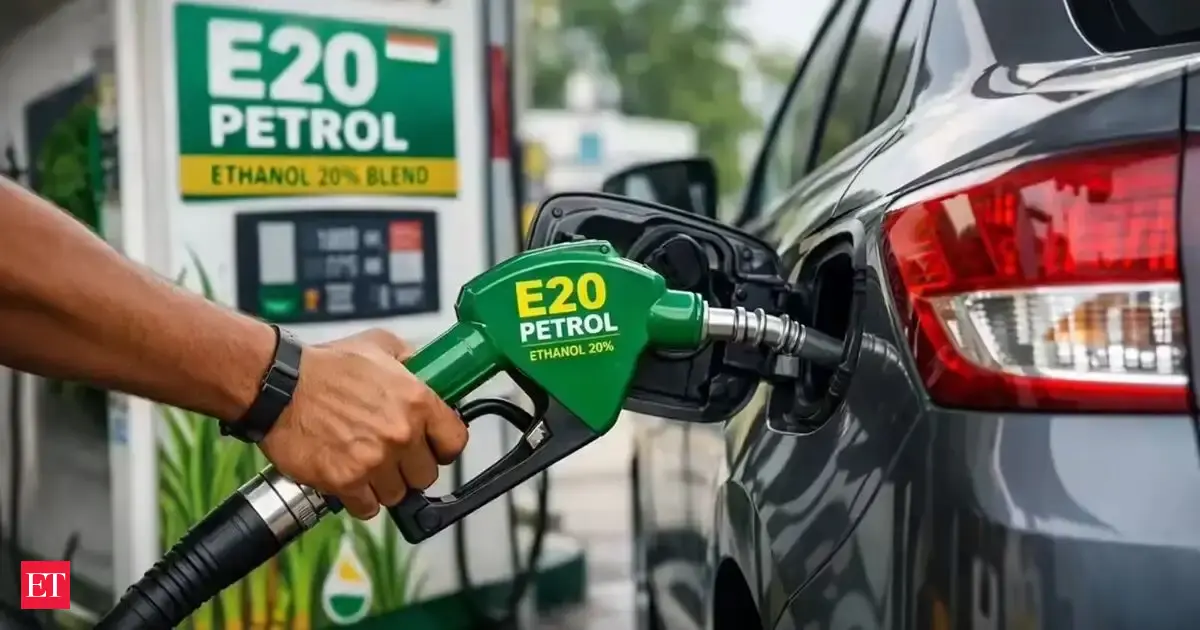
India's nationwide shift to E20 petrol has renewed concerns over the impact of higher ethanol blending on older vehicles, especially after an Automotive Research Association of India (ARAI) report flagged potential risks to rubber fuel-system components in E10-compatible vehicles. The report, which recommended the rollout of E20 but has not been made public, has served as a key reference for both the government and automobile manufacturers, The Times of India reported. According to the report, E20 fuel may deteriorate rubber components such as hoses, gaskets, seals and O-rings in vehicles designed for E10 petrol, requiring replacement over time. What did the ARAI tests find? During four-wheeler engine durability testing, the report found that one BS-IV engine delivered acceptable performance with E20 fuel. However, a BS-VI turbocharged engine developed issues after 265 hours of testing. In separate durability tests conducted by two car manufacturers, one original equipment manufacturer (OEM) reported no issues after 400 hours, with engine performance remaining satisfactory on E20 fuel. Another OEM, however, recorded a thermomechanical failure of the exhaust valve after engines collectively completed 809 hours of testing. A thermomechanical failure occurs when prolonged exposure to extreme heat and repeated mechanical stress causes an engine's exhaust valve to warp, crack or fracture. People familiar with the findings told TOI that factors other than E20 could have contributed to the exhaust valve failure. Experts involved in vehicle testing also noted that engine durability evaluations are typically conducted for around 2,000 hours. Two-wheelers performed better The report said engine durability tests conducted by three two-wheeler manufacturers found no issues, with vehicle performance remaining acceptable on E20 fuel. Across all vehicles tested, E20 showed no adverse impact on metallic components, while tailpipe emissions remained within legislative limits for E10-compatible vehicles. The study also found that evaporative emissions, startability and drivability remained within acceptable limits. However, fuel consumption increased by around 2-6% with E20 compared to E10, although the extent of the increase varied across vehicle models. India has fully transitioned to E20 petrol India completed its nationwide rollout of E20 petrol in April 2025, achieving the target nearly five years ahead of the original 2030 deadline. Regular petrol sold at fuel stations now contains 20% ethanol. The government is already preparing for the next phase of ethanol blending. It has exempted petrol containing 22-30% ethanol from central excise duty, placing it on a tax footing similar to E20. It has also proposed amendments to the Central Motor Vehicles Rules to formally recognise E85 and E100 fuels. For consumers, however, the main concerns remain engine durability, fuel efficiency and whether ethanol blending will eventually move beyond 20%. Why vehicle owners are worried Many motorists are still adapting to the shift from E10 to E20. With regular petrol pumps now supplying only E20, consumers no longer have the option of purchasing petrol without 20% ethanol. Some owners have reported lower fuel efficiency, while others—particularly those with vehicles manufactured before 2012—have expressed concerns over long-term reliability. Vehicles built before April 2023 are also under scrutiny because many were not originally certified for E20 fuel. As reported by TOI, engineers have cautioned that ethanol absorbs moisture more readily than petrol, increasing the risk of corrosion and material degradation in vehicles not designed for higher ethanol blends. Rubber and plastic fuel-system components—including hoses, seals, gaskets and O-rings—are considered more vulnerable than metallic parts. Concerns have also been raised about the long-term durability of valves, piston heads and other fuel-system components in older vehicles. Some motorists have questioned whether E20 could make cold starts more difficult during winter, although automakers have dismissed such concerns. Experts say the risk varies depending on the vehicle. Newer models are generally equipped with ethanol-compatible materials and engine calibrations, whereas older vehicles originally designed for E0 or E10 fuel may face greater long-term compatibility challenges. Why automakers say E20 is safe Despite the apprehensions, leading automobile manufacturers have publicly backed the use of E20 petrol in existing vehicles.Maruti Suzuki, Toyota Kirloskar Motor, Hyundai Motor India, Hero MotoCorp, TVS Motor Company and Bajaj Auto said years of laboratory testing and real-world experience indicate that E20 is safe for vehicles currently on Indian roads. Toyota Kirloskar Motor's Vikram Gulati said E20 was introduced only after rigorous testing, including on older vehicles, and that India's certification process follows internationally accepted UNECE standards. Maruti Suzuki cit