Dashain gone, Tihar uncertain: Nepali workers stranded in Saudi Arabia as Houthi attacks disrupt flights
AI Summary
Houthi attacks that reportedly killed 13 people and injured more than 300 disrupted Saudi airport operations, leaving many Nepali migrant workers unable to travel home. The article describes widespread flight cancellations, halted Kathmandu–Dammam services, and workers facing uncertainty over leave, accommodation and refunds as Nepal’s embassy seeks support from employers.
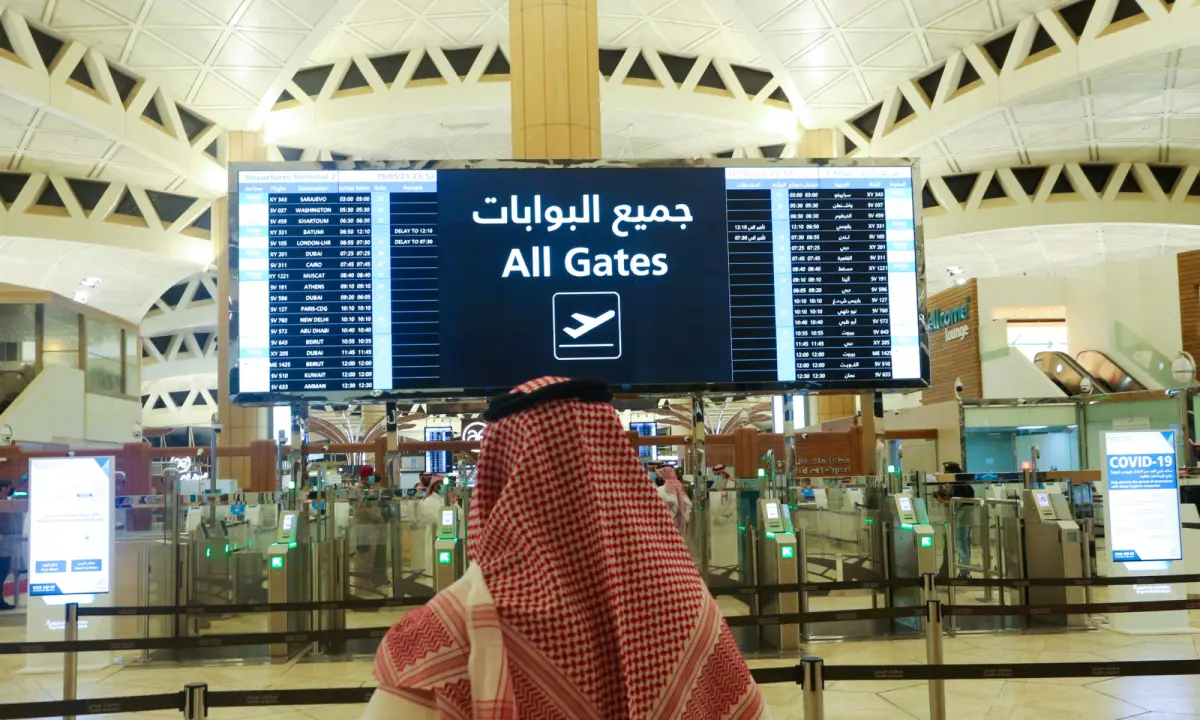
KATHMANDU: Rajesh Rai from Khotang was preparing to return home after three years in Saudi Arabia to celebrate Dashain with family. His employer had granted him a month’s leave and he had an exit-re-entry visa. He had booked an October 11 Air Arabia flight from Riyadh to Kathmandu via Sharjah. But a day before departure, Houthi rebels attacked King Khalid International Airport. Thirteen people, according to Saudi authorities, were killed and more than 300 injured. The airport was shut. After a friend told him that flights were operating from Jeddah, Rai travelled nearly 1,000 kilometres by bus for 13 hours, paying Rs7,000. But he remains in a friend’s room, unsure when he can fly home. “I am neither in my company’s camp nor have I been able to reach home,” said Rai. “Dashain has passed, Tihar is around the corner and my leave is about to end.” Rai is among hundreds of Nepali workers whose plans to return home have been thrown into uncertainty. Between October 8 and 25, about 45 per cent of scheduled flights from Saudi airports were cancelled. At Riyadh’s King Khalid International Airport, the rate reached 86pc. Direct Kathmandu-Dammam flights, widely used by Nepali workers, have also stopped. Nepal Airlines and Himalaya Airlines have cancelled 18 scheduled services since October 11. Nepal Airlines operates weekly and Himalaya twice a week; the latter has announced cancellations through November 4. Around 400,000 Nepalis work in Saudi Arabia. The Department of Foreign Employment says about 7,000 people receive labour permits, including renewals, each month; 8,366 did so in the mid-September to mid-October period. Nepali Embassy in Riyadh says the workers whose contracts have ended are under particular pressure. The embassy has asked employers to provide food and accommodation to the workers. The embassy does not have official figures of the stranded Nepali workers. “More people are contacting us to ask where and from which airport they can travel home,” said labour counsellor Kabiraj Upreti. “We are facilitating whatever we can.” Reuters reported on October 26 that 4,071 of 4,736 flights scheduled at Riyadh airport between October 8 and 25 had been cancelled. Cancellations reached 42pc in Dammam and 46.7pc in Abha. More than 7,800 flights, or 45pc of scheduled departures nationwide, were cancelled. There are a total of 18 international airports in Saudi Arabia. Riyadh airport has partially reopened, but regular services have not returned. Some Saudi carrier flights have resumed, while foreign airlines have reduced or suspended Riyadh services. Jeddah and Dammam also face cancellations and rescheduling. Madhendra Rai, an Ilam native working in Dammam, said repeated cancellation notices were causing mental stress. Airlines were not clearly explaining whether passengers could get refunds or transfer to another flight. “When a flight is cancelled, they do not clearly explain the options. They tell us to take a voucher instead of a refund. Employers also say they will look for an alternative only after the cancellation is confirmed,” said Mahendra. “It is not just the ticket date that keeps changing; the day we can meet our families is also being pushed further away.” Connecting flights through Air Arabia, flydubai and Indian carriers are also hard to find. “Even if we get a ticket, the one-way fare has reached Rs100,000. We have never seen tickets this expensive,” he said. Dilip Baraili, another Nepali worker, said repeated flight cancellations had left ticket-holders in limbo. “The feelings of Nepalis who work hard abroad and wait to return home to celebrate festivals with their families must be understood,” he said. Poor information is also adding to workers’ costs. Ganesh Rai’s October 25 Himalaya Airlines flight was cancelled, with rebooking arranged for October 30. That flight was cancelled, too, soon. The travel agency does not answer calls, he complained. Each fruitless trip to the airport costs him about Rs2,000. Nepal Airlines said it had suspended flights for passenger safety. “This is not because of us,” said spokesperson Archana Khadka. “Services will resume as soon as the situation in Saudi Arabia becomes normal.” The airline says passengers can change travel dates without charge or receive a full refund. Himalaya Airlines said its cancellations were also linked to aviation safety and that it could not guarantee a resumption date. Umesh Pandey, working in Dammam, has waited 18 days to return to Nepal. He is considering travelling by road to Qatar or Bahrain but does not know the immigration procedures. “If we cannot fly from Saudi Arabia, I want to travel by road to Qatar or Bahrain. But I do not know how to get the visa or whether border immigration will let us cross. We have never travelled this way,” said Umesh. The problem is more serious for workers whose exit permits are near expiry. Hemanta Thapa, from Jhapa, works in Najran near the Yemeni border, where the regional airport is closed. H