Can Kabul hold?
AI Summary
The Taliban regime in Afghanistan is facing deep internal fractures and a strategic impasse, with competing factions undermining centralized control. Opposition groups, including the National Resistance Front led by Ahmad Massoud, challenge the Taliban’s authority, raising prospects of localized civil conflict. The fragile governance reflects broad political, security, and societal instability within Afghanistan.
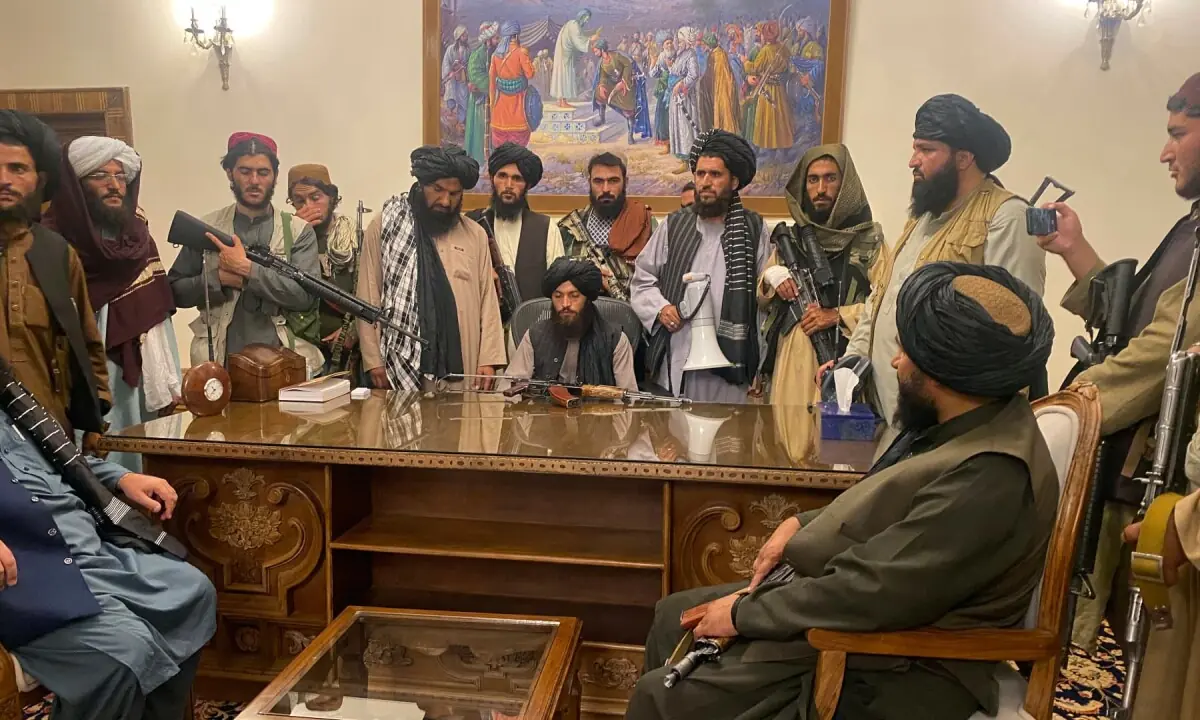
The deceptive veneer of a monolithic and unyielding Taliban regime is rapidly giving way to profound structural decay, demonstrating that authoritarian societal suppression should not be conflated with institutional permanence or state capacity. Nearly five years after the fall of Kabul, the Taliban administration has reached a strategic impasse, balancing precariously on the precipice of a localised, multi-factional civil conflict. This impending instability is not merely a function of diplomatic isolation or international sanctions. Instead, it is being accelerated by an unsustainable internal economy of power, a volatile relationship with regional neighbours, and the emergence of decentralised, non-state resistance movements. Fissures within Domestically, the regime is fracturing along factional lines as the illusion of a unified command is replaced by a zero-sum power struggle between two competing power centres. On one side stands the radical Kandahar faction, a hyper-conservative clerical elite gathered around Supreme Leader Hibatullah Akhundzada, which clashes directly with the militarised Kabul faction led by figures like Sirajuddin Haqqani, who oversee day-to-day governance. Kandahar’s insistence on absolute ideological conformity and the centralisation of fiscal allocations has deeply alienated the field commanders responsible for winning the insurgency, privatising and paralysing the state’s administrative capacity while reducing the economy to a state of artificial survival dependent on illicit trade and irregular humanitarian inflows. This growing internal pressure is further compounded by a consolidating political opposition that directly rejects the Taliban’s claims of absolute control and popular legitimacy. Ahmad Massoud, the leader of the National Resistance Front (NRF), has challenged the regime’s narrative, explicitly dismissing the claim that anti-Taliban forces are fragmented or disconnected from the Afghan masses. Massoud posits that the fundamental path toward resolving the Afghan crisis reduces to a singular, foundational principle: returning the executive right to make decisions directly to the Afghan people. In his assessment, true national unity cannot be built upon a foundation of silence, fear, or the forced structural conformity imposed by the Taliban. Instead, a durable state architecture requires a system grounded in justice, mutual respect, and an institutional acceptance of Afghanistan’s diverse ethnic and cultural tapestry. Hence, the Taliban’s internal security architecture is increasingly challenged by a dual-layered opposition consisting of distinct factions deploying radically divergent operational strategies. While Ahmad Massoud’s NRF represents the formal, institutional wing of the resistance, drawing its lineage from the old political guard and maintaining a conventional military footprint in the northern valleys of Panjshir, Takhar, and Badakhshan, groups like Pasiban-i-Watan (Guardians of the Homeland) and the newer Sepahian-i-Mihan (Soldiers of the Homeland) operate as decentralised, grassroots phenomena. This forces the Taliban to simultaneously defend geographic frontiers in the north against the NRF and combat asymmetric sabotage from decentralised networks, overextending the regime’s security apparatus. A foreign policy blunder On the regional front, the failure of the Taliban’s foreign policy manifests in the collapse of its relationship with Pakistan, which further exposes its internal weaknesses. For decades, Islamabad served as a vital geopolitical corridor for Kabul, yet upon assuming power, the Taliban prioritised ideological solidarity with transnational militant networks over the strategic necessities of state-to-state bilateralism. By providing operational sanctuary, material support, and intelligence access to the Tehreek-i-Taliban Pakistan (TTP) terror outfit , the regime has enabled the group to execute lethal cross-border offensives, including incursions into regions like Chitral and sustained attacks across Khyber Pakhtunkhwa and Balochistan. Recognising that the Taliban regime cannot or will not honour its counterterrorism obligations under regional frameworks, Islamabad has dismantled its policy of strategic patience in favour of kinetic deterrence and direct coercion. Following escalations in cross-border militancy, Pakistan initiated military actions, including Operation Ghazab lil-Haq, deploying targeted cross-border airstrikes against militant infrastructure. In response, Taliban officials have weaponised nationalist sentiment by rejecting the legitimacy of the Durand Line frontier and dismantling border fencing. This territorial defiance has led to sustained ground skirmishes at vital trade links like the Torkham crossing, disrupting regional commerce. Concurrently, the Taliban have accelerated diplomatic and strategic engagement with New Delhi, compounding Islamabad’s concerns vis-à-vis a revived two-front security threat. Russia’s prag