Breathe Pakistan: Minister Musadik Malik calls for investing in youth-led climate projects
AI Summary
The Breathe Pakistan conference highlights the importance of local and global collaboration in addressing climate challenges. Policymakers and experts gather in Islamabad to discuss sustainable strategies for climate resilience and mitigation.
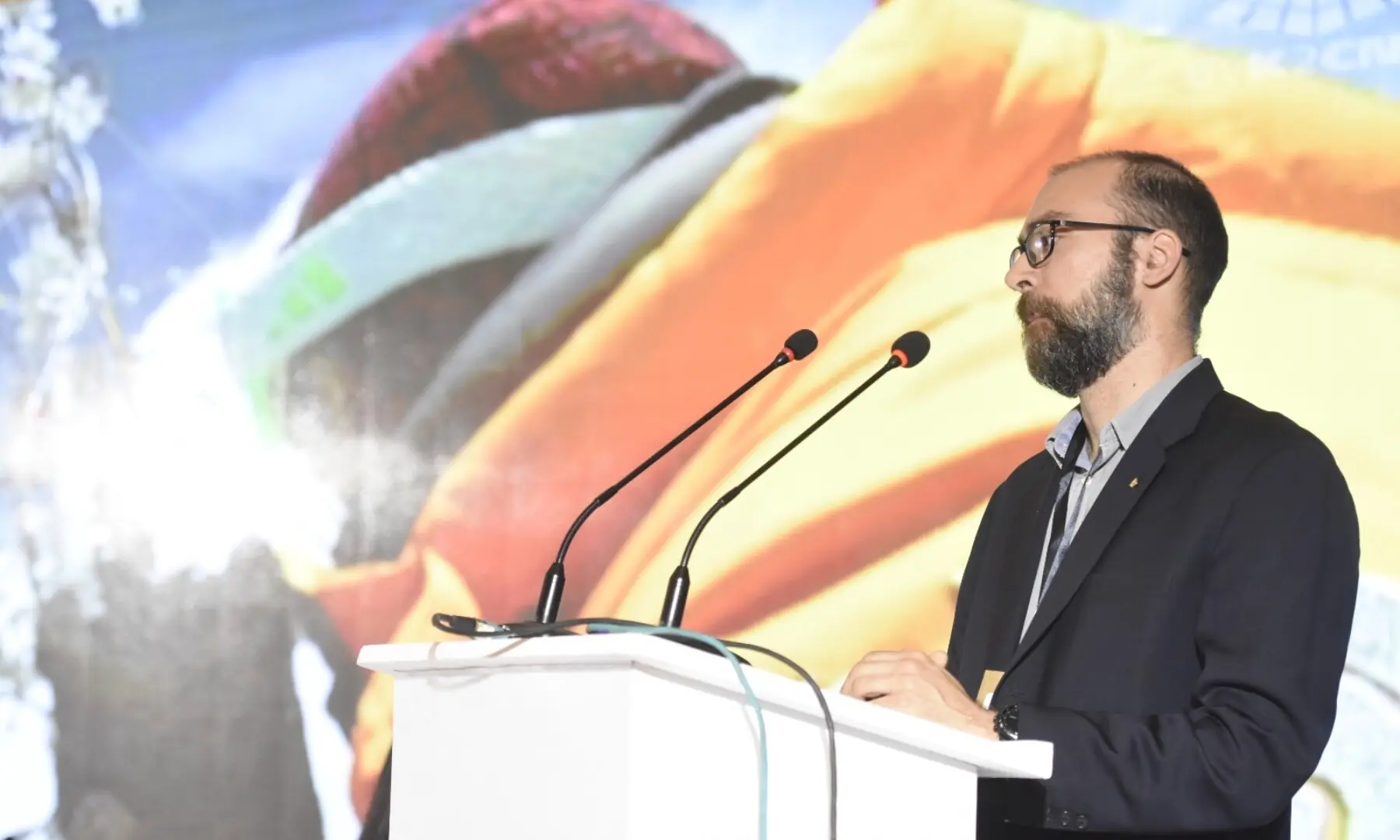
The second edition of The Breathe Pakistan International Climate Change Conference, organised by DawnMedia, is currently underway in Islamabad. Despite contributing minimally to global emissions, Pakistan remains among the most climate-vulnerable nations, underscoring the critical need for coordinated, locally grounded, and globally informed responses. The two-day conference brings together policymakers, experts, and stakeholders from across sectors to examine intersecting challenges and chart a path forward. The first edition of Breathe Pakistan sparked national dialogue and global collaboration around vital climate challenges — from climate justice and finance to renewable energy transitions, disaster risk reduction, and inclusive public-private partnerships. View the full agenda here. 3:19pm — Hisaar Foundation head calls for local govts “Build no more heavy infrastructure, go for nature-based solutions,” suggests Simi Kamal, chairperson of Hisaar Foundation. Kamal called for a functioning local government, saying that the water issues would not be addressed until one was formed. She noted that there was a “plethora of institutions”, with an institutional disconnect that needed to be fixed. “It is the time to think locally and act globally,” she contended, calling for preserving the country’s water bodies. 3:13pm — Panel talk on Indus Basin begins A panel talk, titled “The Indus Basin: Sustainable Governance or Ad Hoc Responses?” has begun. Mirey Atallah, head of adaptation and resilience at the United Nations Environment Programme (UNEP), is moderating the panel. 3:05pm — Researcher presents findings from glacier study project Glaciologist Dr Davide Fugazza speaks at the Breathe Pakistan conference. — White Star/ Tanveer Shahzad Dr Davide Fugazza, a glaciologist and a faculty member at the University of Milan, is giving a presentation on a research project done on glaciers. He spoke about the phenomenon of “Karakoram Anomaly”, adding that even if the glacier area was still, they might be losing glacier mass. “I personally visited these glaciers last year […] and we’re going again this year. We are performing investigations using satellite data to really look at the […] debris and identify the mineralogical properties and what it means for the glacial melt,” he said. 2:58pm — Cannot escape responsibility by evading it today: Erum Sattar Sattar, speaking at the panel, highlighted the need for action to ensure the conservation of the Indus Delta. “The Indus River has sustained civilisations for thousands of years, and what happens next will be determined by the choices Pakistan makes,” she asserted. She further said that Pakistan cannot “escape responsibility” for the Indus River by “evading it today”. Sattar contended that political will and moral courage were required to tackle the issue. 2:53pm — What is ‘ethical leverage’ and why Pakistan can claim it Dr Erum Sattar speaks at the Breathe Pakistan conference. — screengrab Dr Erum Sattar shed light on the concept of “ethical leverage” in climate diplomacy, explaining that it meant “the strategic power that accrues to a nation when it bears a legitimate moral claim with a demonstrated governance competence”. She asserted that Pakistan has “one of the most legitimate moral claims” as it contributed even less than one per cent of global emissions but still absorbed some of the “worst storms”. 2:47pm — Water expert warns Indus Delta is shrinking Dr Erum Sattar further noted that the Indus Delta, which she said was “once one of the most productive ecosystems”, is now “shrinking” and its fisheries “collapsing”. “An estimated 50 million people in Sindh alone have livelihoods that depend on the way the river functions,” she noted. Sattar observed that in a world with fracturing global supply chains and climate disruptions impacting harvests, every drop of water saved and every unit of food grown efficiently was part of “national security”. 2:38pm — Indus basin being squeezed: Erum Sattar Dr Erum Sattar speaks at the Breathe Pakistan conference. — White Star/ Tanveer Shahzad Dr Erum Sattar, a water law and policy expert, noted that the Indus Basin was being squeezed “by climate change from above, from north by glacial disruption, from east by an extremely revisionist neighbour and from within a governance system that is designed for a much more stable world”. She pointed out that the Indus river irrigates about 90pc of Pakistan’s food production, yet half of all irrigation water no longer comes from the river but from aquifers. “We are quite literally mining the water beneath our feet.” 2:26pm — Water management no longer optional but a necessity: minister Water Resources Minister Mian Muhammad Mueen Wattoo highlighted the need for efficient water usage, stressing that the country cannot afford wastage. Noting that the agriculture sector consumed the largest share of the country’s water, he said the ministry was focus