A nation between adversaries
AI Summary
Pakistan has emerged as a key mediator between the US and Iran, successfully facilitating a ceasefire and the Islamabad Memorandum of Understanding in 2026. This mediation approach reflects Pakistan's strategic goal to prevent regional conflicts from spilling into its borders and to assert itself as a middle power in Middle Eastern geopolitics.
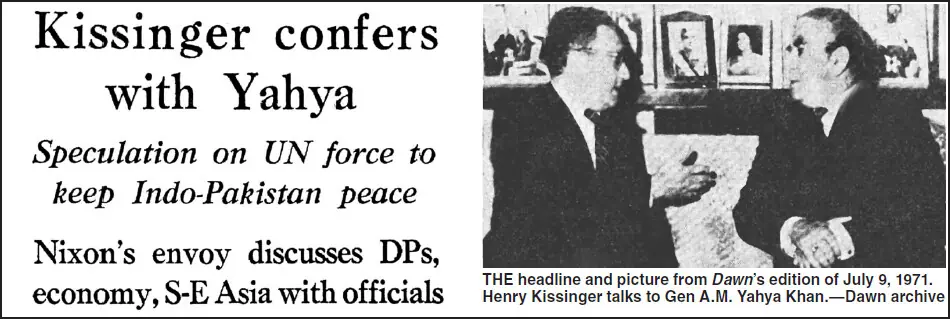
PAKISTAN is currently in the global spotlight for mediating between the United States and Iran. Islamabad’s rigorous mediation efforts helped bring about a much-needed ceasefire between the US and Iran in April, which culminated in the Islamabad Memorandum of Understanding in June 2026. Analysts see the current mediatory position as a new shift in Pakistan’s foreign policy priorities, with Islamabad attempting to assert itself as a middle power and a relevant strategic player in Middle Eastern geopolitics. However, a comprehensive historical analysis reveals that mediation has remained one of Pakistan’s most essential foreign policy imperatives. Pakistan has long adopted an active strategy of mediation to prevent, manage, and settle disputes in the Middle East and within its immediate western neighbourhood. Far from being a passive regional actor, Islamabad has often positioned itself as a mediator in conflicts ranging from great-power rivalries to intra-Muslim problems. This approach is based on a deliberate foreign policy calculus determined by geography, strategic alliances, and the need to protect national interests while expanding diplomatic influence beyond South Asia. The logic behind Pakistan’s mediating role The primary strategic motive behind Pakistan’s mediation diplomacy is the need to keep regional disputes from spilling over onto its own borders. Unlike great powers, which may approach mediation largely for geopolitical or ideological reasons, Pakistan’s security is immediately influenced by conflicts in its near neighbourhood. Regional conflicts have historically been accompanied by refugee flows, cross-border terrorism, interruption of trade routes, arms trafficking, narcotics smuggling, and humanitarian crises, all of which have imposed significant economic and security costs on Pakistan. For Islamabad, mediation, therefore, constitutes a preventive tactic meant to contain problems before they evolve into greater challenges to Pakistan itself. Afghanistan is a glaring example of this security rationale. For over four decades, Afghanistan’s instability has had far-reaching implications for Pakistan, including inflow of millions of refugees, increased terrorism and border insecurity, and enhanced economic burden. As a result, Pakistan expended enormous diplomatic capital in promoting the intra-Afghan peace process, as well as talks between the Taliban and the US. Islamabad’s coordination and facilitation resulted in the 2020 Doha Agreement. These efforts were primarily motivated by Islamabad’s desire to construct a relatively stable Afghanistan capable of denying space to transnational terrorist organisations and minimising fears of long-term instability along the Pakistan-Afghan border. Thus, mediation is a strategic investment in Pakistan’s domestic security. A comprehensive historical analysis reveals that mediation has remained one of Pakistan’s most essential foreign policy imperatives. A similar rationale supports Pakistan’s efforts to defuse tensions in the Middle East, particularly efforts to reduce tensions between Iran and Saudi Arabia. Pakistan shares a lengthy border with Iran while also maintaining strong strategic ties with Saudi Arabia and the Gulf Cooperation Council (GCC) states. The signing of the Strategic Mutual Defence Agreement in 2025 has further increased Pakistan’s geopolitical stakes in the Middle Eastern security environment, as has the recent mutual defence pact with Turkiye and Saudi Arabia. Any escalation between Tehran and Riyadh could place Pakistan in a perilous strategic position. These confrontations have often exposed Islamabad to opposing geopolitical realities, as well as exacerbating local sectarian tensions. The 1990s era of sectarian violence has had a significant impact on Pakistan’s strategic thinking. Islamabad doesn’t want to allow space for another wave of sectarian violence influenced by the Middle Eastern security environment. This is why Pakistan has continuously pursued a policy of passive or active mediation between Saudi Arabia and Iran. For instance in 2016, when tensions between Saudi Arabia and Iran escalated due to the execution of a famous Saudi Shia cleric, Sheikh Nimr al-Nimr, Pakistan hurried to utilise shuttle diplomacy to defuse tensions. Pakistan’s then-prime minister Nawaz Sharif and chief of army staff Raheel Sharif advocated holding direct discussions between Saudi Arabia and Iran in Islamabad and recommended that both countries establish focal persons to keep communication lines open for dialogue. These activities were widely considered as an effective tool for reducing tensions between Saudi Arabia and Iran. Similarly, in June 2017, a Saudi-led quartet (also including the United Arab Emirates, Bahrain, and Egypt) broke diplomatic relations and implemented a rigorous land, air, and sea blockade against Qatar. Saudi Arabia put enormous pressure on Pakistan to take Riyadh’s side. Rather than supporting the blockade, Pakistan mai